There are two very different ways to look at your health.
One needs a needle.
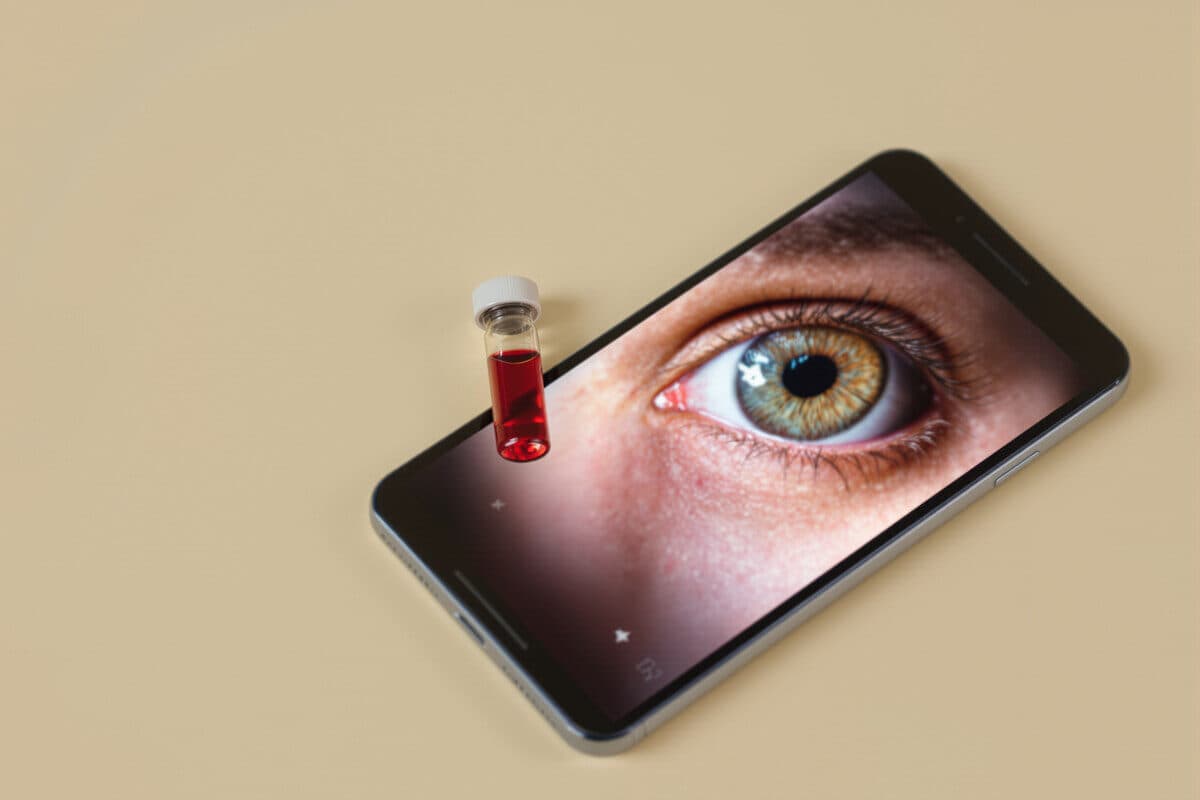
The other needs a photo of your eye.
People treat them as rivals, and I think that's a mistake.
They answer different questions, and you'll get more out of both once you know which question you're asking.
What a blood panel measures
A blood panel is a chemistry report.
A lab measures what's in your blood at that moment and gives you a number for each thing it was asked to check.
The common panels cover different ground:
- Complete Blood Count (CBC): red and white blood cells, hemoglobin, hematocrit and platelets.
- Comprehensive Metabolic Panel (CMP): glucose, calcium, electrolytes, kidney markers like BUN and creatinine, liver enzymes like ALT and AST, plus albumin and total protein.
- Lipid panel: total cholesterol, LDL, HDL and triglycerides.
- Thyroid panel: TSH, free T3 and free T4.
- Vitamins and minerals: vitamin D, B12, iron, magnesium and folate.
Your doctor reads each number against a reference range and uses it to decide what to do.
That precision is the whole point of blood work.
If your fasting glucose creeps from 95 to 108 over two years, you and your doctor can see it happen and act on it.
Nothing replaces that, and I'd never tell you to swap it for anything.
The limit is scope.
A panel measures what it was ordered to measure, in one moment, and nothing else.
What an iris reading looks at
An iris reading is a different kind of look.
There's no lab and no chemistry.
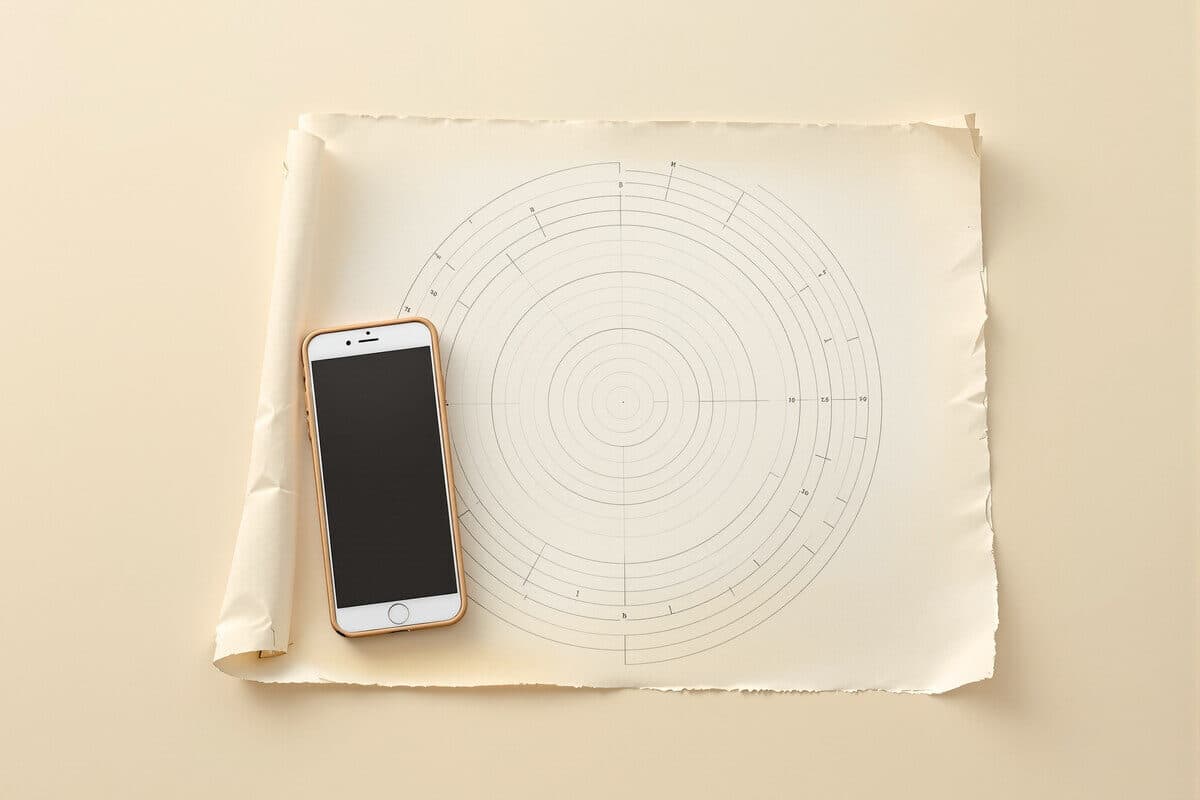
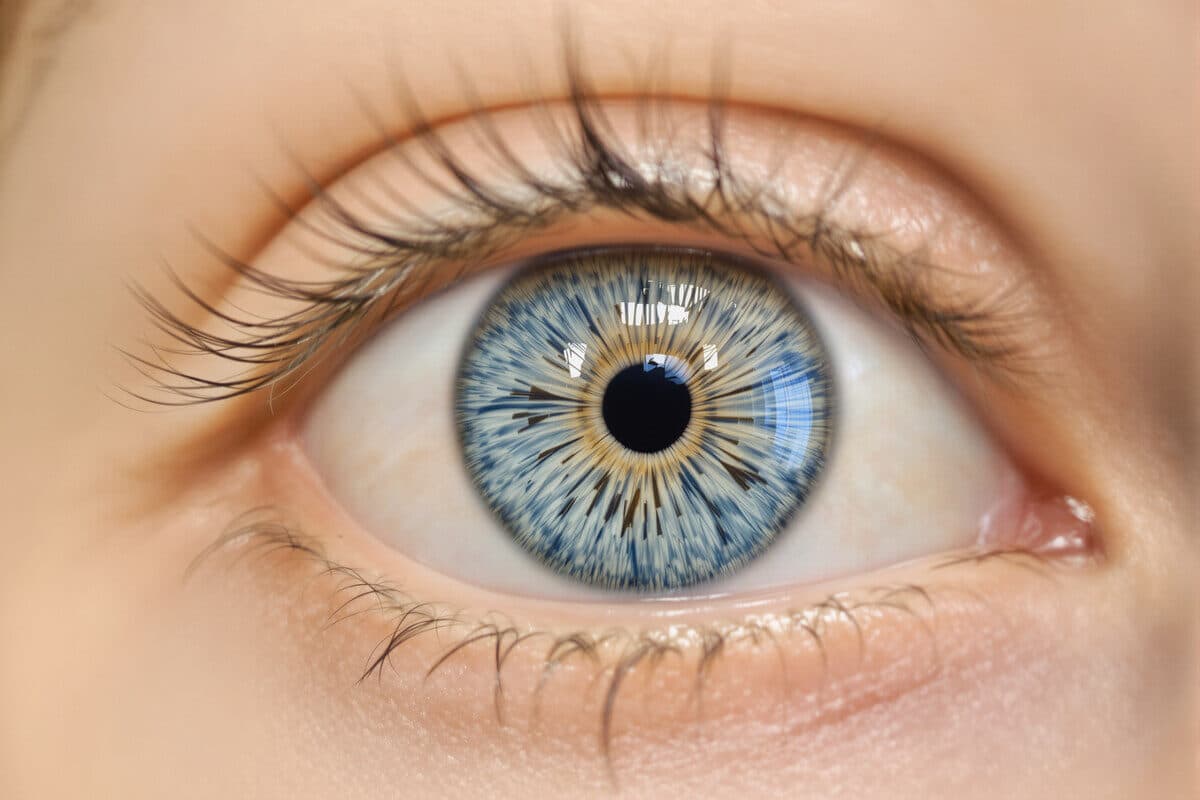
You take a photo of each eye, and the reading describes the fibers, colors, rings and marks in each iris against an iridology chart.
Iridology has mapped zones of the iris to body systems for well over a century.
Here's how the tradition reads the main signs:
- The collarette, the ring around the pupil, is read as the digestive zone.
- Radii solaris, spokes running out from the pupil, are read as strain in digestion.
- Nerve rings, curved arcs across the iris, are read as a sign of sustained stress and tension.
- Contraction furrows, curved lines nearer the outer edge, are read by many iridologists as circulation under load.
- The lymphatic rosary, a ring of small white dots near the edge, is read as the lymphatic system running slow.
- Lacunae and pigment spots draw attention to whichever body system their zone maps to.
Our reading checks both photos are clear enough, then reads them against a fourteen-system chart and four personality types.
Every finding has to point at a mark you can see in your own photo.
The strength here is breadth.
One pair of photos covers every zone on the chart at once, plus your personality type, in about a minute.
The limit is just as plain.
A pigment spot doesn't tell you your ALT, and a nerve ring doesn't tell you your cortisol.
A reading isn't a medical test.
If something feels wrong, see your doctor.
Different questions, different tools
| The question you're asking | Blood panel | Iris reading |
|---|---|---|
| What's my glucose, cholesterol or thyroid number right now? | Yes, with exact numbers | No |
| Am I low in vitamin D, B12 or iron? | Yes | No |
| How is my body built, by the iridology chart? | No | Yes, across fourteen systems |
| Where does my iris show stress rings or digestive signs? | No | Yes |
| What's my personality type in behavioural iridology? | No | Yes, one of four types |
| Can I do it at home in a minute, with no needle? | No | Yes, a photo of each eye |
When to reach for each
Get a blood panel when you need a number.
Your doctor wants your hemoglobin, you're starting a new medication, or you're tired all the time and want your thyroid and vitamins checked.
Those questions need numbers, and only a lab gives you them.
Get an iris reading when you want a different kind of look at yourself.
It's free, it takes a minute, and it gives you a map to think about: where the tradition sees strain, where it sees strength, and what kind of person your iris says you are.
Never use an iris reading in place of a blood test.
If you need a number, get the number.
How I'd use them together
Get your blood work on the schedule your doctor sets.
Take an iris reading too, and keep it.
Then use the reading for the part a blood panel never touches: your habits.
If your reading points at stress, take that as a push to fix your sleep and take real breaks.
If it points at digestion, try a simple food diary for two weeks and see what you notice.
Those are changes worth making anyway, and a reading gives you a reason to start this week instead of someday.
My take
Blood work is irreplaceable for numbers.
When you need to know your LDL is 142, nothing else will do.
An iris reading is something else: a look at how you're built, through a tradition I think is worth taking seriously.
Use the blood panel for precision and the iris for perspective.
Don't ask either one to do the other's job.